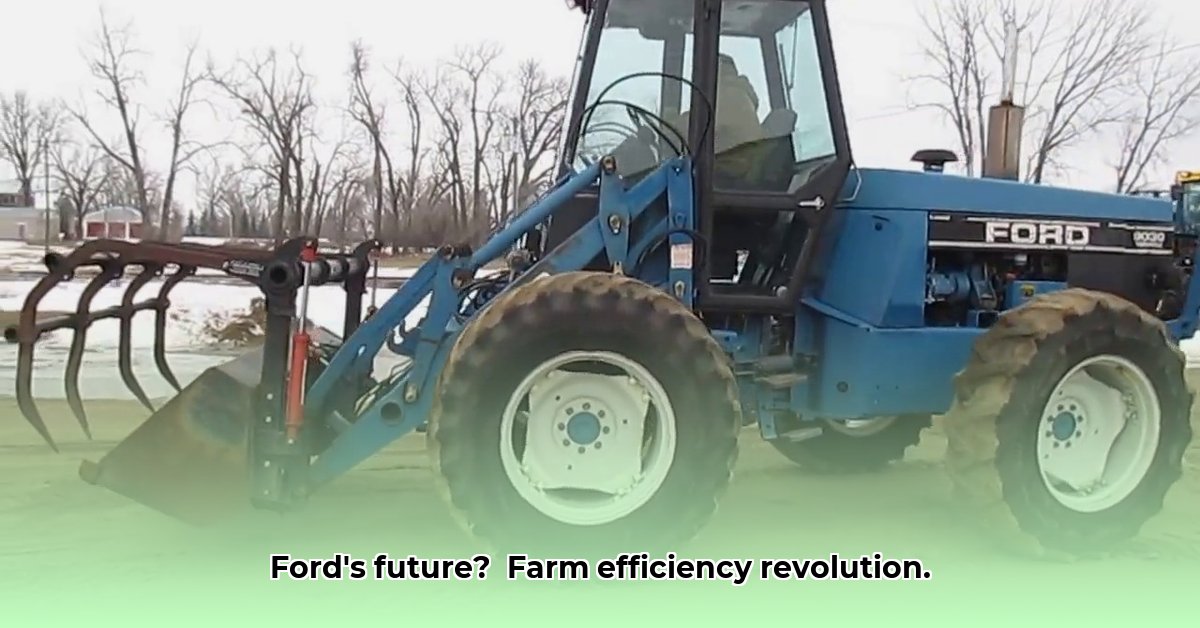
Farming is evolving, and Ford's bi-directional tractors (tractors capable of driving forward and backward with ease) are at the forefront of this change. These innovative machines offer significant improvements in efficiency, sustainability, and overall farm profitability. This article delves into the benefits of bi-directional tractors, analyzing their impact on the used market, their contribution to sustainable farming, and the implications for various stakeholders. We'll also provide actionable steps for farmers and other stakeholders to take advantage of this emerging technology. For more information on Ford tractor models, check out this helpful resource: Ford Tractor Models.
Navigating the Used Ford 9030 Tractor Market
The used agricultural equipment market, like any used goods market, presents both opportunities and challenges. The Ford 9030, a popular bi-directional model, provides a case study. Prices vary significantly depending on factors such as age, hours of operation, condition, and location. A well-maintained tractor with a documented service history commands a higher price, mirroring the dynamics of the used car market. Regional demand also plays a crucial role; high demand areas often see increased prices. Furthermore, technological advancements can lead to faster depreciation of older models. Therefore, prospective buyers should approach the used tractor market cautiously, carefully weighing the tractor's condition and features against the asking price to ensure an optimal ROI.
Bi-Directional Tractors and Sustainable Agriculture: A Synergistic Partnership
Modern agricultural practices increasingly emphasize sustainability. Bi-directional tractors contribute to this goal in several ways. Precision farming technologies integrated into these tractors boost efficiency and reduce environmental impact. GPS guidance minimizes overlaps during tilling or seeding, conserving fuel, seeds, and fertilizers while reducing soil compaction. Fuel-efficient engines directly reduce greenhouse gas emissions, promoting environmentally responsible farming practices. Telematics systems, essentially onboard computers, provide real-time operational data, enabling proactive maintenance and maximizing uptime. These tractors optimize resource utilization and minimize waste, enhancing the overall sustainability of farm operations.
How do these benefits translate to different farm sizes? The initial investment in a bi-directional tractor can be substantial, representing a larger hurdle for smaller operations. However, the long-term savings in fuel, labor, and reduced environmental impact can often outweigh the initial cost, particularly for larger farms with high operational volumes. Smaller farms might explore leasing options or collaborative arrangements to access this technology. Ongoing research continually seeks ways to make these advanced tractors more accessible and financially viable for all scales of farming.
Stakeholder Impact and Actionable Intelligence: A Multi-faceted Perspective
The adoption of bi-directional tractors has wide-ranging implications across the agricultural value chain. Farmers benefit directly from increased efficiency and reduced operating costs, leading to improved profitability. Dealers experience increased sales of these in-demand models. Manufacturers benefit from growing demand, fueling continued innovation. Governments play a crucial role by potentially offering incentives or subsidies to facilitate widespread adoption, thereby supporting sustainable agricultural practices.
What actionable insights can we glean from this? Short-term strategies include research into the used market, exploration of government subsidies, and leveraging data-driven decision-making. Long-term strategies involve fully integrating precision farming technologies and optimizing farm operations based on real-time data analysis.
Actionable Steps for Different Stakeholders
The successful transition towards more sustainable farming necessitates a coordinated effort. Here's a breakdown of actionable strategies tailored to different stakeholders:
| Stakeholder | Short-Term Actions (0-1 Year) | Long-Term Actions (3-5 Years) |
|---|---|---|
| Farmers | Thoroughly research used tractor markets; explore government grants and subsidies. | Fully integrate precision farming technologies and data-driven decision-making into operations. |
| Dealers | Expand inventory to include bi-directional tractors; invest in staff training. | Develop comprehensive training programs on advanced tractor technologies. |
| Manufacturers | Prioritize R&D focused on sustainable design and fuel efficiency. | Develop advanced telematics and data management systems for integrated farm management. |
| Governments | Offer financial incentives and subsidies for adopting advanced farm equipment. | Invest in rural infrastructure to facilitate the implementation of agrotechnologies. |
Conclusion: Driving Towards a Sustainable Future
Bi-directional tractors represent a significant leap forward in agricultural technology, offering a compelling blend of efficiency, sustainability, and economic viability. While the initial investment can be substantial, the long-term benefits – reduced fuel consumption, increased productivity, and minimized environmental impact – position these tractors as a crucial element in the transition towards a more sustainable future for agriculture. Ongoing research and development will undoubtedly lead to further advancements in this technology, promising even greater efficiency, accessibility, and environmental friendliness in the years to come. The future of farming is increasingly reliant on such innovations.